
Chromium in Minnesota Drinking Water
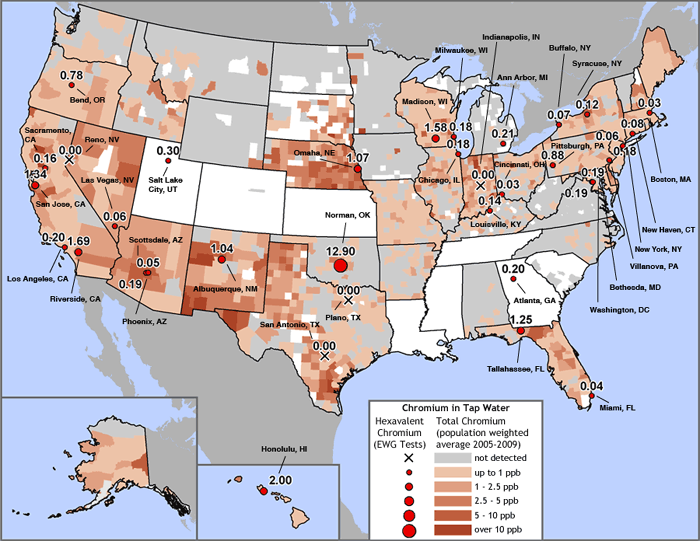
Total Chromium levels in drinking water have been monitored since 1992.
As of 2010, the EPA is currently reviewing scientific data, and may consider lowering allowable levels.
Different Types of Chromium in Water
The most common forms of Chromium in water are Trivalent (Chromium 3), and Hexavalent (Chromium 6).
Chromium 3 occurs naturally in many vegetables, fruits, meats, grains and yeast.
Chromium 6 is a by-product of industrial processes — forging stainless steel, chrome plating, manufacturing dyes and pigments, tanning leather, producing photographic materials and staining wood.
At many locations, Chromium compounds have entered water supplies due to leakage, poor storage, or improper disposal practices.
Health Effects of Chromium
People are exposed to Chromium by eating food, drinking water, and absorption through skin and inhalation. Most tap water has 0.4ppb – 8.0ppb of Chromium. Dermal exposure may also occur during the use of consumer products that contain the chemical.
Chromium 3 is not considered a health risk.
It is a mineral nutrient essential to normal glucose, protein, and fat metabolism and is thus an essential dietary element. In the absence of Trivalent Chromium, tissues resist insulin’s influence, blood sugar cannot enter cells to be metabolized, and signs of Type II diabetes may appear. The federal government has established a minimum daily requirement of 50-200mg of Chromium for dietary ingestion.
Chromium 6 is considered toxic.
Exposure to Hexavalent Chromium has been shown to cause a number of health problems from both acute AND chronic exposure.
Symptoms include:
- Industrial workers exposed have a lung cancer rate 20x higher than that of the general population.
- Inhalation or oral exposure may produce effects on the liver, kidney, gastrointestinal and immune systems, and possibly the blood.
- Dermal exposure may cause dermatitis, sensitivity, and ulceration of the skin.
- Chronic inhalation exposure results in effects on the respiratory tract, with perforations and ulcerations of the septum, bronchitis, decreased pulmonary function, pneumonia, asthma, and nasal itching and soreness reported.
Standards for Chromium in Water
The current limit for Chromium in water is set at 100ppb (parts per billion). The EPA has regulated Chromium 6, or Hexavalent Chromium, as part of the total Chromium drinking water standard since 1992.
Current testing does not distinguish what percentage of the total Chromium is Chromium 6 versus Chromium 3.
The EPA regularly revaluates drinking water standards and based on new science, the agency has launched a rigorous and comprehensive review of the effects of Chromium 6 on human health. In September 2010, a draft was released of that scientific review for public comment. Once the scientific assessment is finalized in 2011, the EPA will determine if a new standard needs to be set.
What are Effective Methods for Removal of Chromium?
Your first step should involve having a Qualified Premier Water Technician perform a FREE WATER TEST to determine the overall quality of your water. During this analyis, a sample can be collected and sent to a State Certified Lab to accurately measure the Chromium levels in your water.
Reverse Osmosis systems using a certified TFC membrane and Pureoflow systems are effective at removing all forms of Chromium. The Pureoflow would be a good whole-house treatment alternative to an under sink system as it would offer added protection from inhalation.