
Iron Bacteria in Minnesota Well Water

Does your well water have an Iron Bacteria problem?
You might if your water is rusty or smelly. You’re not alone – it’s a very common well water problem in Minnesota.
Iron Bacteria is not a health risk. But it can cause damage to your home and even other water treatment equipment. Worse yet, Iron Bacteria is often misdiagnosed. If it’s treated incorrectly, small problems can get much worse.
What is Iron Bacteria?
The term “Iron Bacteria” does not refer to a single species of bacteria.
“True” iron bacteria depend on the oxidation of iron for their metabolic energy. This group is most often associated with filamentous and stalked forms that are incrusted with iron (Leptothrix, Clonothrix and Gallionella).
There are also acidophilic iron bacteria, like the autotroph Ferrobacillus ferroxidans. They oxidize iron in low pH environments and are most commonly associated with acid mine waste. The acidophilic bacteria are rarely found in drinking water supplies.
Visible Signs of Iron Bacteria
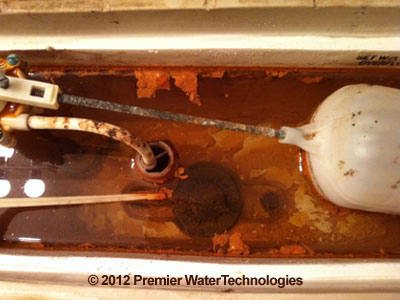
When Iron Bacteria “feed” on iron in water, the dissolved “ferrous iron” reacts with oxygen in the air to form rust-colored iron oxides (ferric iron). Once the cells begin to decay, they release a reddish or brownish slime material. If you see slimy or clumpy deposits, they are likely caused by Iron Bacteria.
Iron Bacteria Slime in Toilets
Orange/brown/red slime often accumulates in toilet tanks. Sometimes it floats in the water like “orange snot”. In less extreme cases, you may notice an orange slime “coating” inside the toilet tank that can be wiped off with a finger.
Irridescent Oily Sheen in Toilets
An oily sheen on the water surface is another Iron Bacteria indicator. You can take a stick and swirl it in the back of a toilet tank. If the sheen breaks apart into pieces, it is probably a result of Iron Bacteria.
Iron Bacteria Smell
Iron Bacteria in well water is safe to drink. But you may not want to drink it. There are a number of foul odors that result from these nuisance bugs. Common odors associated with Iron Bacteria include:
- Rotten egg smell
- Swampy odor
- Sewage-like odor
- Cucumber (semi-sweet smell)
The “rotten egg smell” is often mistaken for Hydrogen Sulfide gas. If the gas is the true water problem, it can easily be treated with an Air Injection Iron Filter. If the problem is actually bacteria-related, air injection will make the problem worse. See the “Iron Bacteria Treatment” section below for more details.
Iron Bacteria Plumbing Corrosion
Both Sulfur and Iron Bacteria can form microzones of high acidity and high concentrations of corrosive ions inside your plumbing. Corrosion is usually worse in “plumbing dead ends” with stagnant water. An Iron Bacteria Removal system that continually disinfects the water supply can help with bacteria-related corrosion. These Iron Filters maintain a low level of disinfectant (like chlorine) in the water supply. Low disinfectant levels are usually not noticeable, and will keep the “bugs under control”.
Blocked Water Drains and Damaged Water Equipment
Iron Bacteria slime builds up in drains. The result is much like a blocked artery. If you have a drain that pools up, or takes water slowly, it may be restricted from Iron Bacteria slime. Water treatment equipment like Water Softeners and Reverse Osmosis systems can suffer from similar problems.
A restricted water softener drain line will prevent the system from flushing properly. This will damage the water softener resin. Over time, the entire water softener will plug up with slime and restrict flow. Reverse Osmosis systems and Carbon Filters are even more sensitive. Bacterial slime will foul these products even more quickly.
Testing for Iron Bacteria
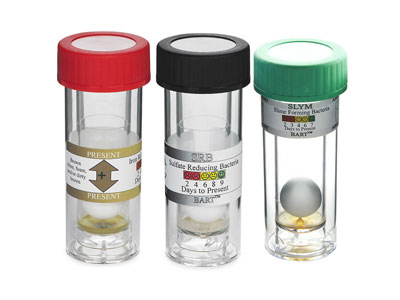
The visual signs and “smell tests” mentioned above are fairly accurate Iron Bacteria tests.
A true “Iron Bacteria Test” involves an 8 day bacteria culture. These tests cost around $40.00 and require a sterile sample bottle and collection method.
About 25% of our clients prefer the absolute verification they get from a lab test. For others, the odor and visual signs are accurate enough.
Shock Treat a Well for Iron Bacteria
The MN Department of Health has a nice guide that explains how to chlorinate a well:MN DOH Well Disinfection Guide.
Well chlorination works, but it’s usually not permanent. Results can last from a few days to a year. It’s pretty difficult to totally rid a well and water system of Iron and Sulfur Bacteria.
In many cases it is only possible to control bacteria problems rather than completely eradicate them.
Iron Bacteria Treatment
Water softeners, sediment filters, and carbon filters have no effect on Iron Bacteria.
A Greensand Iron Filter, Birm Iron Filter, or Pyrolox Iron Filter will not help Iron Bacteria either.
DO NOT use an Air-Injection Iron Filter for Iron Bacteria. At least don’t use “air-only”. Here’s why:
Air-injection Iron Filters use air as an oxidant. They work really well for Iron and Hydrogen Sulfide gas.
Problem is, the additional oxygen in the water puts Iron Bacteria on steroids.
Small bacteria problems quickly become MAJOR problems.
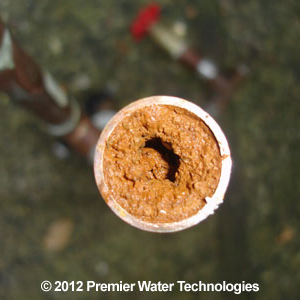
The Iron Bacteria slime grows out of control. It will plug up plumbing, and the Iron Filter, amazingly fast.
Just look at what an air injected Iron Filter did to the plumbing in this Shorewood, MN home:
A properly configured Iron Filter is an effective tool for Iron Bacteria treatment. These systems have 3 stages:
- Disinfectant Injection
- Retention (time to kill bacteria)
- Filtration (removes oxidized metals and bacteria
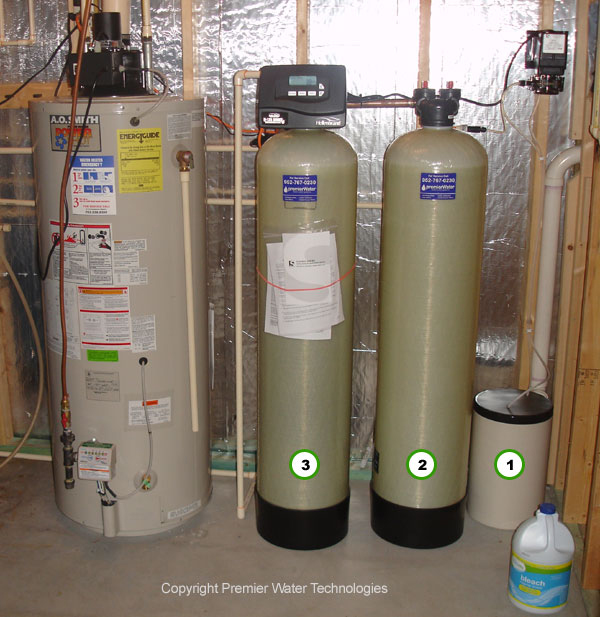
These systems must be sized to your well pump capacity, drain limitations, and Flow Rate Requirements.
With careful planning, these systems are very effective and require minimal maintenance.
Iron Bacteria Disinfection Stage
Our disinfectants of choice are Ozone and Chlorine. The Storm Ozone Iron Filter is a powerful all-in-one system that uses ozone disinfection. This Iron Filter is very popular as there are no chemicals added to your water.
Household bleach is 8.25% sodium hypochlorite. It’s cheap, readily available, stable, and it works. It’s the most documented disinfectant in the world.
Hydrogen Peroxide has become popular in agricultural applications. For Hydrogen Peroxide to kill Iron Bacteria, you must maintain super high levels around 100ppm. At this level, water becomes very bitter tasting. A cow may drink it, but you probably won’t want to.
Retention Stage
Disinfectants like Ozone and Chlorine need time to kill bacteria. A Retention Tank (also called a detention or oxidation tank) is used to mix the water and disinfectant. They are sized based on your flow rate requirement. The more water you need, the bigger the Retention Tank.
Iron Filtration Stage
The Filter is used to capture the oxidized biomass that accumulates in the Retention Tank. Disinfectants like Chlorine are also very effective at oxidizing Iron, Manganese, and Arsenic. Those oxidized metals are also captured in the Iron Filter. The Iron Filter is also sized based on the flow rate you need. A higher flow rate will require a Filter with more square footage.
Check out our 3 article series on how Iron Filters work for more information:
How Iron Filters Work – Part One
How Iron Filters Work – Part Two
How Iron Filters Work – Part Three